
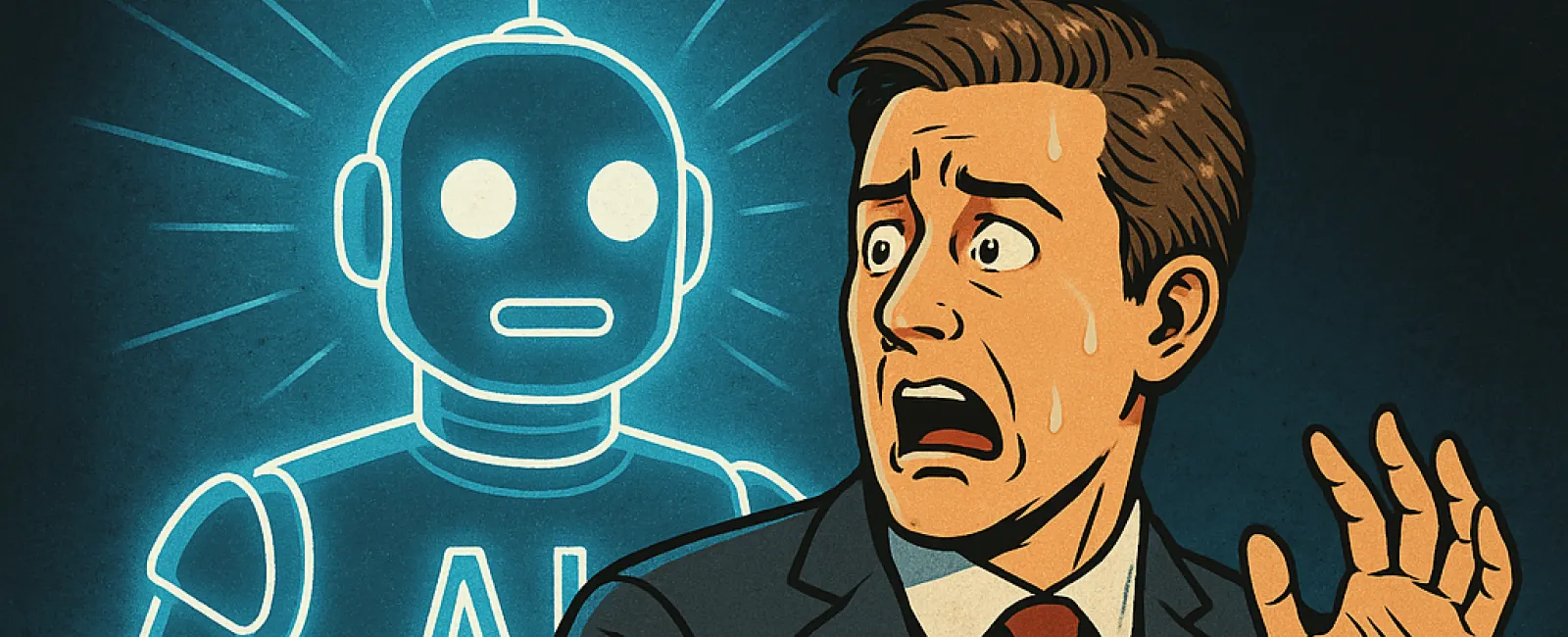
Artificial Intelligence is evolving at lightning speed, transforming how businesses operate. While this progress is thrilling, it's crucial to remember that cybercriminals have equal access to these AI technologies. Let's illuminate some of the hidden threats lurking in this new digital landscape.
Beware of Your Video Chat Dopplegängers - The Danger of Deepfakes
Deepfake technology, powered by AI, has reached astonishing levels of realism, enabling malicious actors to exploit it for sophisticated social engineering attacks targeting companies.
For example, a recent security incident involved an employee at a cryptocurrency organization who was deceived during a Zoom meeting by AI-generated deepfakes impersonating senior executives. These fake leaders instructed the employee to install a Zoom extension to access the microphone, opening the door for a North Korean cyber intrusion.
Businesses now face a challenge in validating identities as traditional verification methods get upended. To detect these deceitful ploys, watch for unusual facial features, awkward pauses, or inconsistent lighting in video calls.
Phishing Emails Are Evolving - Stay Alert Against AI-Enhanced Scams
Phishing attacks have long plagued organizations, but with AI crafting more convincing emails, the usual giveaways like poor grammar or spelling mistakes no longer reliably reveal fraud.
Cybercriminals now integrate AI tools into their phishing kits to automatically translate emails and fake landing pages into multiple languages, enabling their campaigns to reach a global audience quickly and efficiently.
Despite these advances, proven security strategies remain essential. Implementing multifactor authentication (MFA) significantly strengthens defense, as attackers typically won't have access to users' secondary devices. Moreover, ongoing security training empowers employees to recognize warning signs such as urgent requests and suspicious messages.
Beware of Deceptive AI Software - Malware Masquerading as Tools
Malicious actors capitalize on AI's rising popularity by distributing fake AI applications loaded with malware. These counterfeit "AI tools" often feature just enough legitimate functionality to appear authentic to unsuspecting users but conceal harmful code that compromises systems.
One notable case involved a TikTok account promoting ways to install "cracked" software to bypass licensing for apps like ChatGPT via PowerShell scripts. In truth, it was a malware distribution scheme uncovered by security researchers.
To protect your business, prioritize security awareness and collaborate with your Managed Service Provider (MSP) to thoroughly vet any new AI tools before installation.
Ready to Exorcise AI Threats From Your Enterprise?
Don't let AI-driven threats keep you awake at night. Although attackers are becoming more sophisticated with deepfakes, AI-powered phishing, and rogue AI software, strong defenses will empower your business to stay ahead and secure.Click here or call us at 703-879-2070 to book your free 15-Minute Discovery Call today. Let's discuss how to safeguard your team from the darker side of AI before it threatens your operations.


